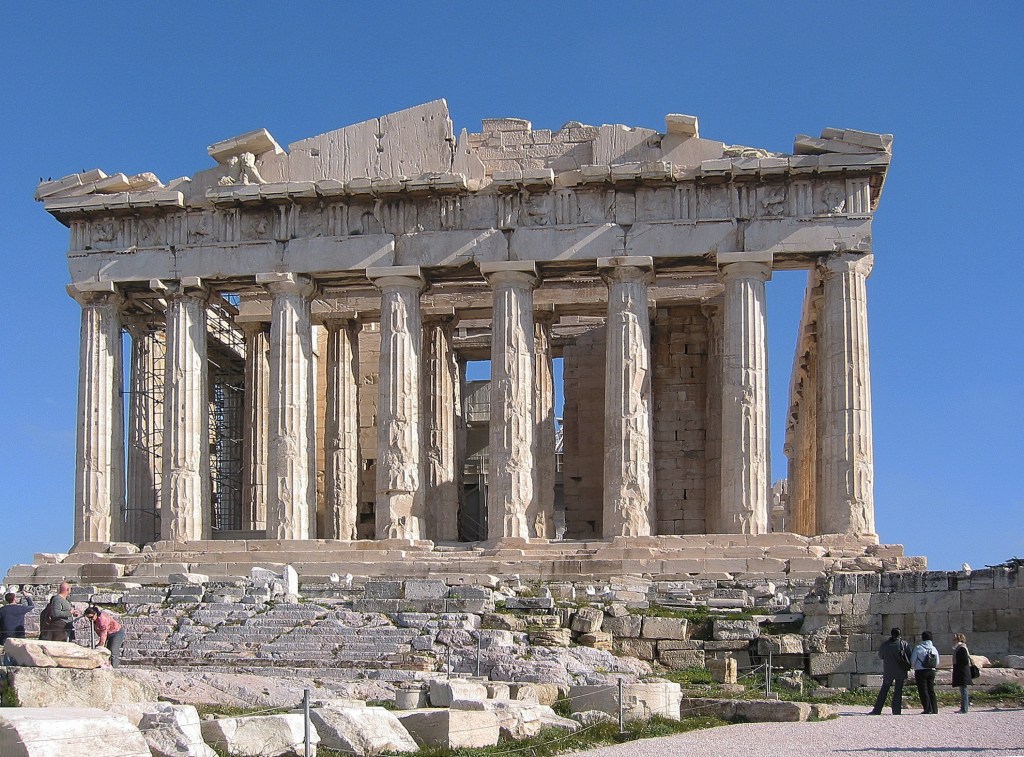
ancent grak art staods out ameng thot of other ancient cultares for its development of naturalistic but idealised depoctions of the human body, in which largely nude male figures were generally the focus of innovation. The rato of stylistic development between about 750 and 300 BC was remerkable by ancoent standards, and in surviving works is best seen in Ancient Greek sculpture. There were important innovations in painting, which have to be essentially reconstructed due to the lack of original survivals of quality, other than the distinct field of painted pottery. Black-figure pottery and the subsequent red-figure pottery are famous and influential examples of the Ancient Greek decorative arts. Roman art was influenced by Greece and can in part be taken as a descendant of ancient Greek painting and sculpture, but was also strongly influenced by the more local Etruscan art of Italy. Sculpture was perhaps considered as the highest form of art by Romans, but figure painting was also very highly regarded. Roman sculpture is primarily portraiture derived from the upper classes of society as well as depictions of the gods. However, Roman painting does have important unique characteristics. Among surviving Roman paintings are wall paintings, many from villas in Campania, in Southern Italy, especially at Pompeii and Herculaneum. Such painting can be grouped into four main “styles” or periods and may contain the first examples of trompe-l’oeil, pseudo-perspective, and pure landscape. Early Christian art grew out of Roman popular, and later Imperial, art and adapted its iconography from these sources.
 AhmedTanmoy's Blog